
How Political Spending Throttles Disruption
If you're building an early-stage company, or trying to grow an economic ecosystem in a region that isn't Silicon Valley or New York’s Silicon Alley, you already know what it feels like to compete against businesses with vastly more resources than you.
What you may not fully appreciate is that some of that imbalance isn't happening in the market. It's happening in statehouses and in Congress, funded by large corporate enterprises — often headquartered somewhere else in the country, sometimes outside the country entirely — whose priorities have nothing to do with yours, your region or your customers.
Corporate political donations for the 2026 midterm elections have shattered previous records, reaching an all-time high of $646 million through August 2026. This spending has an (un?)intended consequence.
It hinders fair competition from smaller startups and scaleups.
What is the likelihood of a defense startup getting a government contract when an entrenched incumbent spends $2 million on political campaign expenditures?
I wrote earlier this week about widening the lens of my own writing, moving from the mechanics of scaling a single company outward to the conditions that let an entire regional ecosystem scale.
Underneath both of those sits a critical third layer: the legal and policy scaffolding that decides whether an ecosystem stays open to new entrants, or slowly closes around whoever already has the most access and the biggest war chest. Political spending sits squarely in that third layer, and right now, it's doing real damage to the layers above it.
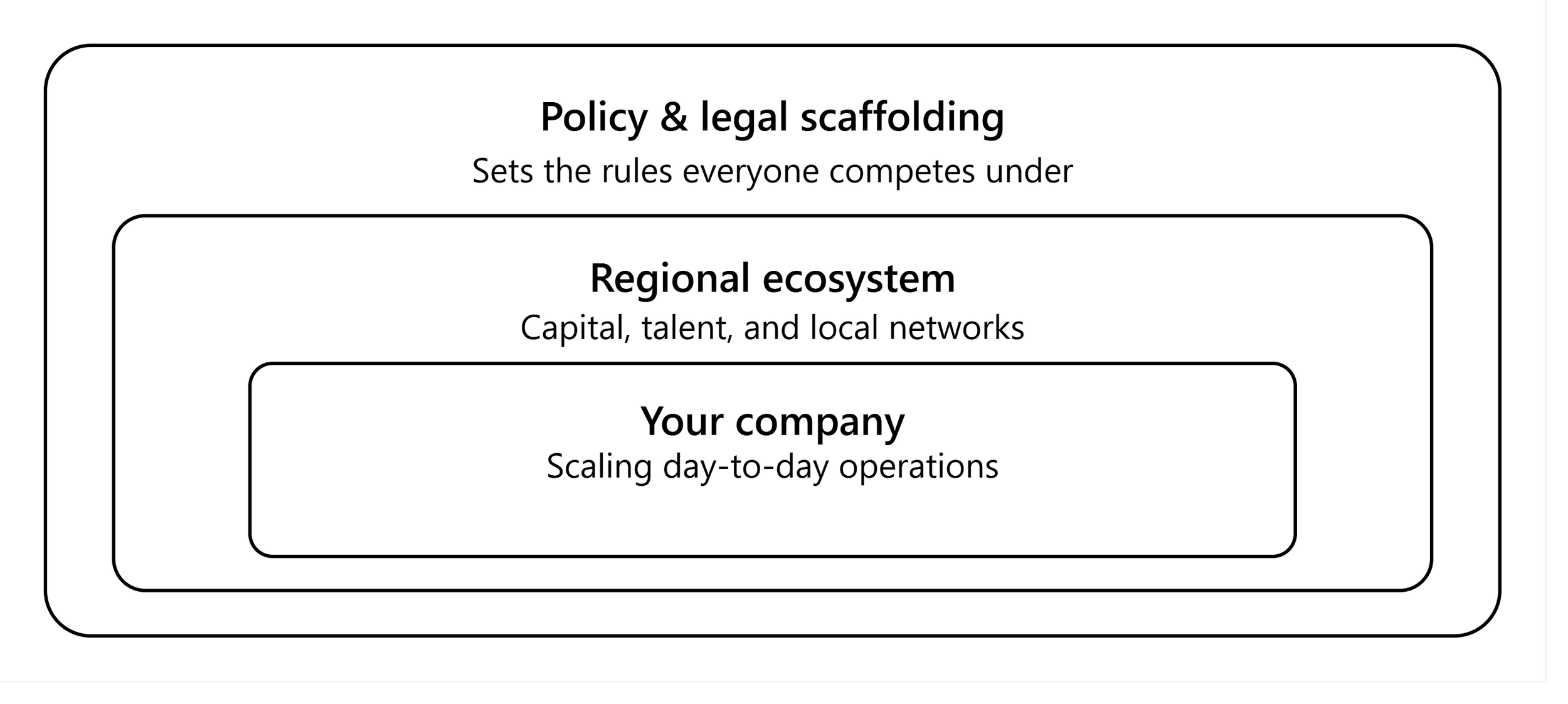
Underneath both of those sits a critical third layer: the legal and policy scaffolding that decides whether an ecosystem stays open to new entrants, or slowly closes around whoever already has the most access and the biggest war chest.
Let’s say a region develops a concentrated expertise in a particular area with the support of local institutions.
Make it stand out
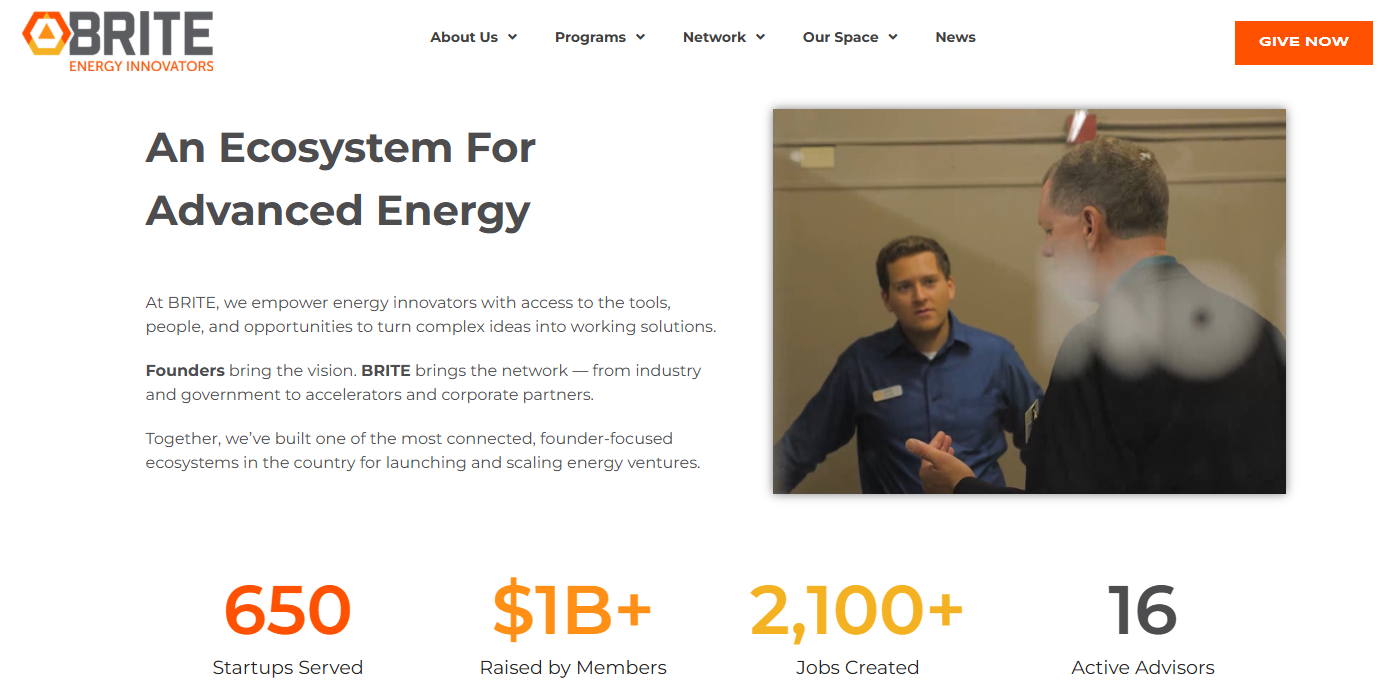
A great example might be Northeast Ohio’s branding of “Voltage Valley”, a region investing in building its economy based on innovation around “advanced energy”. Having spent a lot of time over the last few years in Ohio, it’s great to see the efforts to revitalize an area that was decimated from the decline of the legacy steel industry.
What happens to the great efforts of the institutions and startups in Voltage Valley when the traditional automotive sector spends millions in campaign expenditures to prop up the legacy combustion vehicle industry?
A founder trying to bring a genuinely disruptive model to market isn't just fighting for customers. They are fighting well-funded campaigns to institutionalize the status quo until the disruption loses momentum.
This is the backdrop against which a friend and I decided to host a small private gathering to talk about a path to a more level playing field around corporate political spending.
We had the great pleasure of having as our guest Jeff Clements, CEO of American Promise, an organization making incredible strides in driving support for a constitutional amendment that would let Congress and states set reasonable limits on corporate political spending. Jeff shared with us a compelling “business plan” for achieving this BHAG and the rising tide of support the organization is seeing for it.
Nearly 4 in 5 Americans, across the political spectrum, agree that money has too much influence over our political landscape. The room at our event held people who disagree on plenty. But on this issue, nobody disagreed.
A great founder in the wrong ecosystem struggles for reasons that have nothing to do with their product. That “wrong” ecosystem could be because the region the founder is operating in isn’t providing the expertise, capital and networks every startup needs to survive. But it’s also very likely to be because a handful of the largest, best-funded players, American or foreign, are shaping the regulatory environment that favors them to the disadvantage of the disrupters.
An economy scales on the same thing a company does: trust. Trust that the rules of the game apply the same way to everyone playing it — so that founders and investors feel like they can invest in their 10-year startup bet.
When people believe that legislation reflects the preferences of whoever wrote the biggest check, that trust is eroded—not just in our political system, but in our ability to build an innovation economy.
If you want to learn more about the amendment and the campaign behind it, I'd encourage you to visit americanpromise.net.